Testimonial interview questions that get usable answers
15 testimonial interview questions grouped by stage, from the problem to the advice, plus the 3 kinds that never work. For marketing teams filming in Malaysia.
Ask open questions in story order: what life was like before, why the customer chose you, what working together was like, what changed, and what they’d tell someone in their old position. Avoid anything that can be answered with yes, anything that tells them what to say, and anything that asks them to describe your company.
Below are 15 questions in 5 stages, the 3 kinds of question that never work, and how to run the interview so the answers survive the edit. It is for marketing teams in Malaysia filming a customer, a partner or a retailer, often for the first time.
How many questions, and how long
Plan 12 to 15 questions and a 20 to 30 minute interview. That is the guidance from Final Cut Multimedia, a US production company that publishes its own testimonial question list, and it matches what we see. Longer interviews produce tired answers. More questions means each one gets rushed.
Send the customer the topic areas ahead of time, never the exact wording. “We’ll talk about what was going on before, why you chose us, and what changed” gives them time to find an example without rehearsing a line.
Before question 1, ask 2 or 3 warm-up questions you will never use: name, role, what a normal week looks like. They get the customer talking in full sentences while the crew checks the audio and the framing.
The 15 questions, by stage
The structure follows the one Final Cut publishes, cut down to 15 and reworded for the way Malaysian customers talk.
Before
- Before you worked with us, what was the situation you were dealing with?
- What had you already tried, and what happened?
- What was that costing you, in time, money or stress?
The decision
- What was the moment you decided something had to change?
- When you started looking, what were you worried about?
- Why did you choose us over the other options?
The experience
- Walk me through the first few weeks of working together.
- Was there a moment that stood out?
- Did anything go wrong, and how was it handled?
The result
- What has changed since?
- Can you put a number on it? Time saved, enquiries, sales, anything you already track.
- What do your team or your customers say about it?
The advice
- Who would you recommend us to, and who is this not right for?
- If someone in your old position was unsure, what would you tell them?
- Is there anything I didn’t ask that you want people to know?
The 3 questions that do the most work
Question 4, the moment. Final Cut notes that this is the question that produces the opening line of most testimonial videos. A specific moment, a missed deadline, a phone call on a Friday, is what makes a viewer keep watching.
Question 9, what went wrong. Most companies are afraid to ask it. Final Cut calls it the one that produces the most credible testimonial. A customer who says there was a problem with the schedule and it was fixed the same day is more believable than one who says everything was perfect.
Question 15, the safety net. Customers often save the best line for the end, when they think the interview is over. Keep the camera rolling.
The 3 kinds that never work
Yes or no questions. “Were you happy with the results?” gets “Yes.” Nothing to cut. Ask “What changed?” instead.
Leading questions. “Would you say the team was fast to respond?” gets a quote that sounds fed, because it was. Viewers can hear it.
“Describe the company.” “Can you tell us about the brand and what it offers?” turns the customer into a salesperson. They recite your website back to you, and nobody believes a customer who sounds like a brochure. Final Cut lists questions about you among the ones to avoid: the video is about the customer’s problem and the customer’s result.
Getting answers that survive the edit
Full sentences that restate the question. Your voice is cut out of the final video. “About 6 months” means nothing alone. “It took about 6 months before we saw the change” stands on its own. Tell the customer this before you start, then remind them once after the warm-up.
The language they think in. In Malaysia that is often not the language of your website. A retailer who explains things best in Mandarin or BM should answer in Mandarin or BM, and subtitles carry it for everyone else. We cover the trade-offs in subtitles or separate cuts.
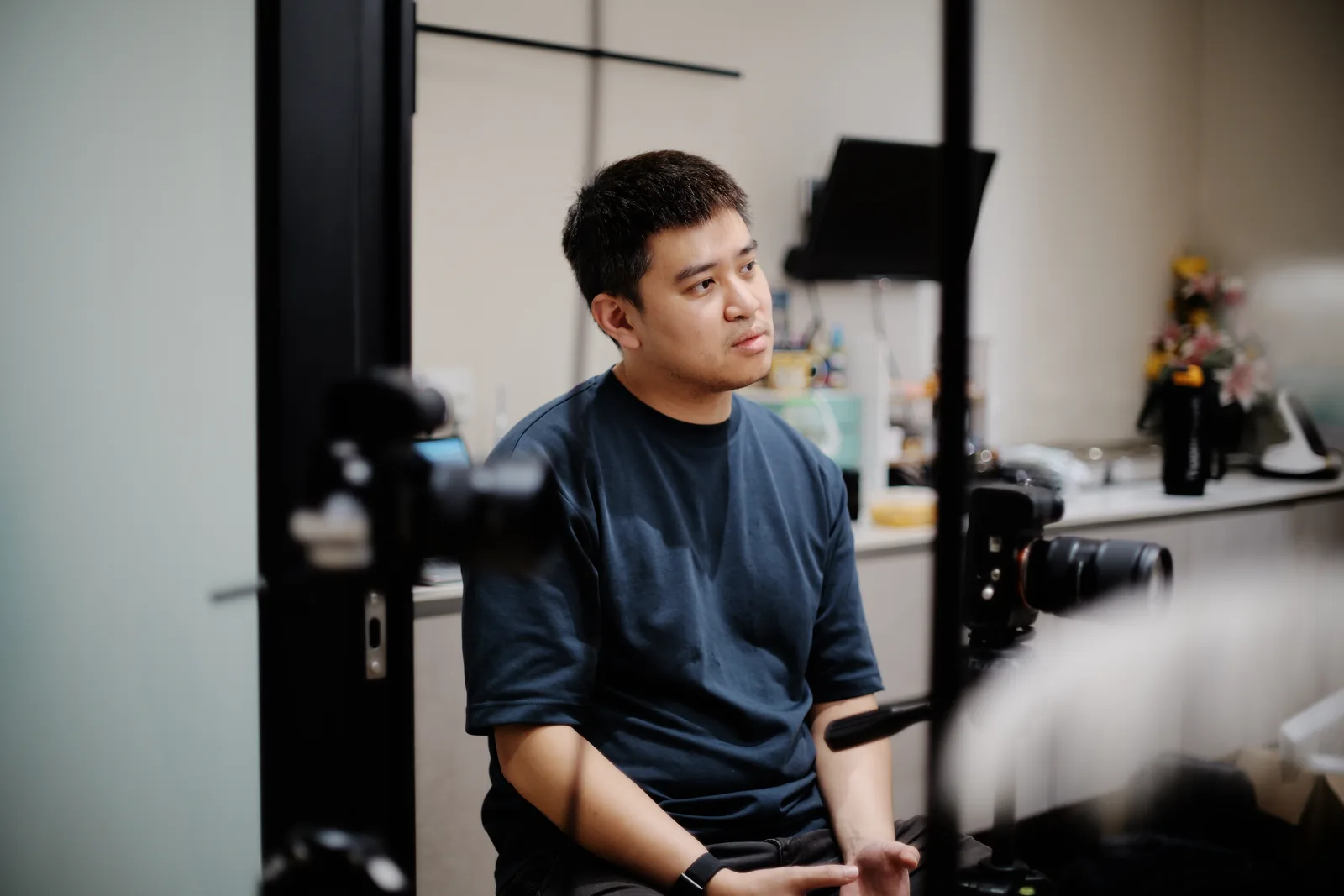
Their own space. Film where the customer works. Final Cut’s view is that the customer’s own space is the proof, and in our experience a shop floor or an office says more than a hotel backdrop.
A signed release on the day. Final Cut recommends every person on camera signs a short appearance release, brought to the shoot, not emailed afterwards. PDPA applies to personal data, so check the wording with your lawyer if the testimonial will run in paid ads.
What this looked like in a Haier showroom
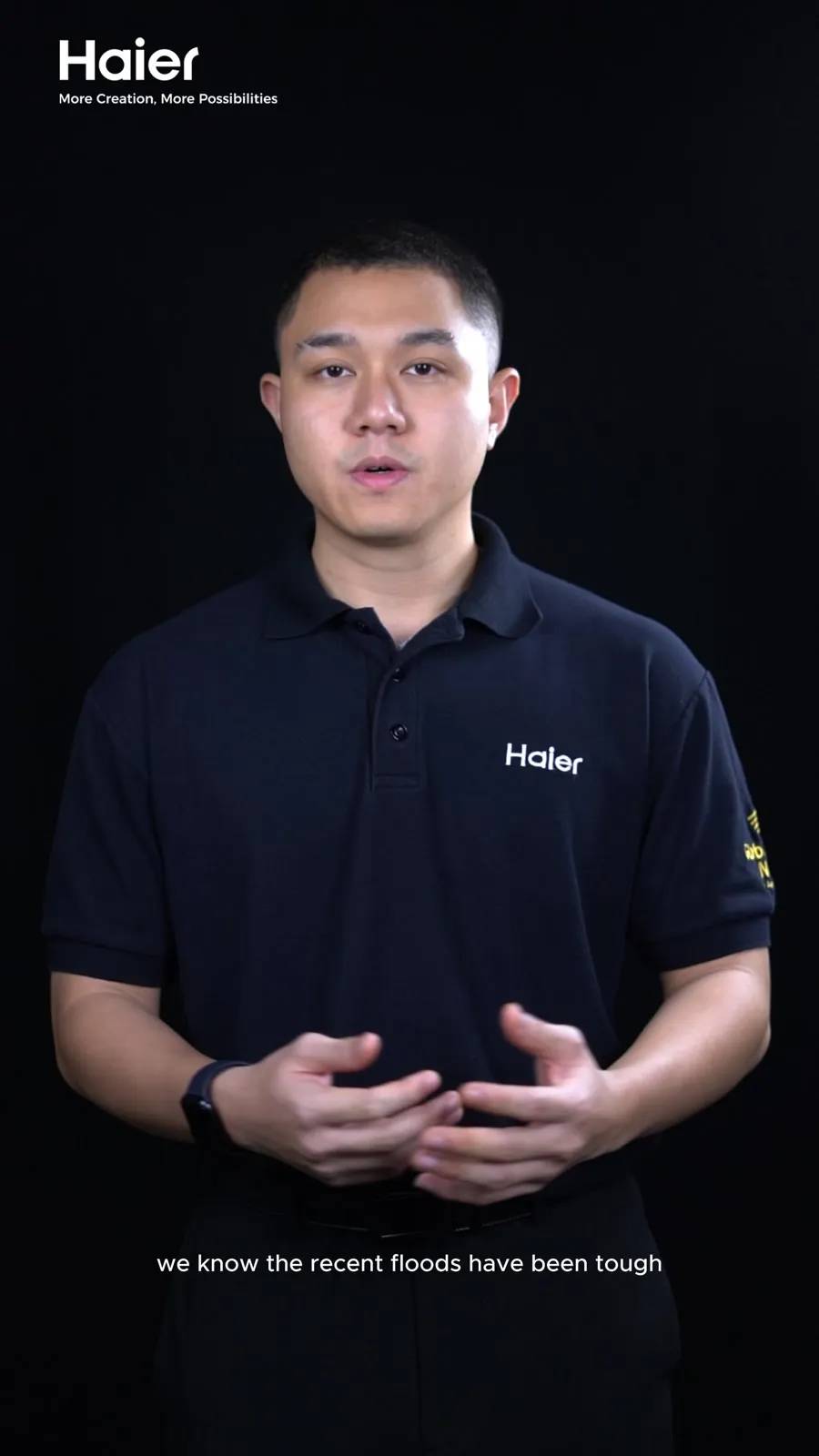
The Haier retailer interview runs 1 minute 43 seconds, filmed vertically in the retailer’s own store. She stands in front of a wall of TV screens with a clip-on mic on her dress and answers in Mandarin, with Chinese subtitles on screen. The edit cuts away to the shop floor: washing machines, a hob, fridges and the warranty stickers on them.
The backdrop, the language and the cutaways were set before the camera came out. In our view, choices like those do more for a testimonial than any line written for the speaker.
Before you film
Pick 12 to 15 questions from the list, send the topic areas, and book the customer’s own space for 30 minutes plus setup. If the person on camera is your own founder rather than a customer, the prep is different: see how to prepare a founder for camera. For what to cut from one interview, see how long a testimonial video should be.
If you have a customer ready to talk, send us the date and a line on the job. We reply with a quote within 1 working day.
Questions people ask
What questions should I ask in a video testimonial?
Ask open questions in story order: what the situation was before, why the customer chose you, what working together was like, what changed, and what they would tell someone in their old position. Ask for a specific moment and, gently, for a number they already track. Close with whether there is anything you didn't ask that they want people to know.
How many questions should a testimonial interview have?
Plan 12 to 15 questions and a 20 to 30 minute interview, which is the guidance Final Cut Multimedia publishes. More questions means rushed answers, and longer interviews produce tired ones. Add 2 or 3 warm-up questions at the start that will never be used, so the customer is talking in full sentences before the questions that count.
Should the customer see the questions in advance?
Send the topic areas, not the wording. Something like 'we will talk about what was going on before, why you chose us, and what changed' gives them time to think of an example. Exact questions sent ahead turn into rehearsed answers, and rehearsed testimonials sound rehearsed.
What questions should you avoid in a testimonial interview?
Yes or no questions, because 'Were you happy?' gets 'Yes.' Leading questions, because the answer sounds fed. And 'describe the company' questions, because the customer ends up reciting your website. The video is about the customer's problem and result. Avoid jargon, and anything that could embarrass the customer on camera.
What should a good testimonial include?
A specific problem, a reason for choosing you, one honest moment from the work, and a change the customer can describe in their own words, ideally with a number. Footage of the customer in their own space helps, because it shows the result rather than claiming it. The customer should be the subject from start to finish.