Should your Reels be phone-filmed or crew-filmed?
A split by post type for Malaysian brands: what to film on a phone, what needs a crew, and how to run both on one calendar without the feed looking mixed.
Both, split by the type of post. Film behind-the-scenes clips, quick replies and candid moments on a phone, and bring in a crew for product, presenters, anything with paid media behind it, and anything that has to match across months.
This guide gives that split post by post, with a table comparing phone and crew side by side. It is for marketing managers deciding how much of a monthly calendar to hand to a studio and how much to keep in-house.
What a phone does better
A phone is in the room when something happens. Nobody books it, sets it up or waits for it. For a short list of post types, that beats any crew.
People also act differently in front of it. A colleague holding a phone gets a looser answer than a camera on a tripod with a light beside it. For behind-the-scenes posts, that looseness is the point.
Speed matters more on some platforms than others. Lamanify’s guide to short-form video in Malaysia says TikTok here favours casual, unpolished, native clips, and that trends move within 48 hours. No crew calendar keeps up with that, and it should not try.
Lamanify goes further: a smartphone with good natural light and a cheap wireless clip-on mic, it says, can beat a polished TV-style commercial. We agree, with the conditions in that sentence. The light and the mic do most of the work. A phone with bad sound in a noisy room does not beat anything.
What a crew does better
A crew earns its place in 4 situations.
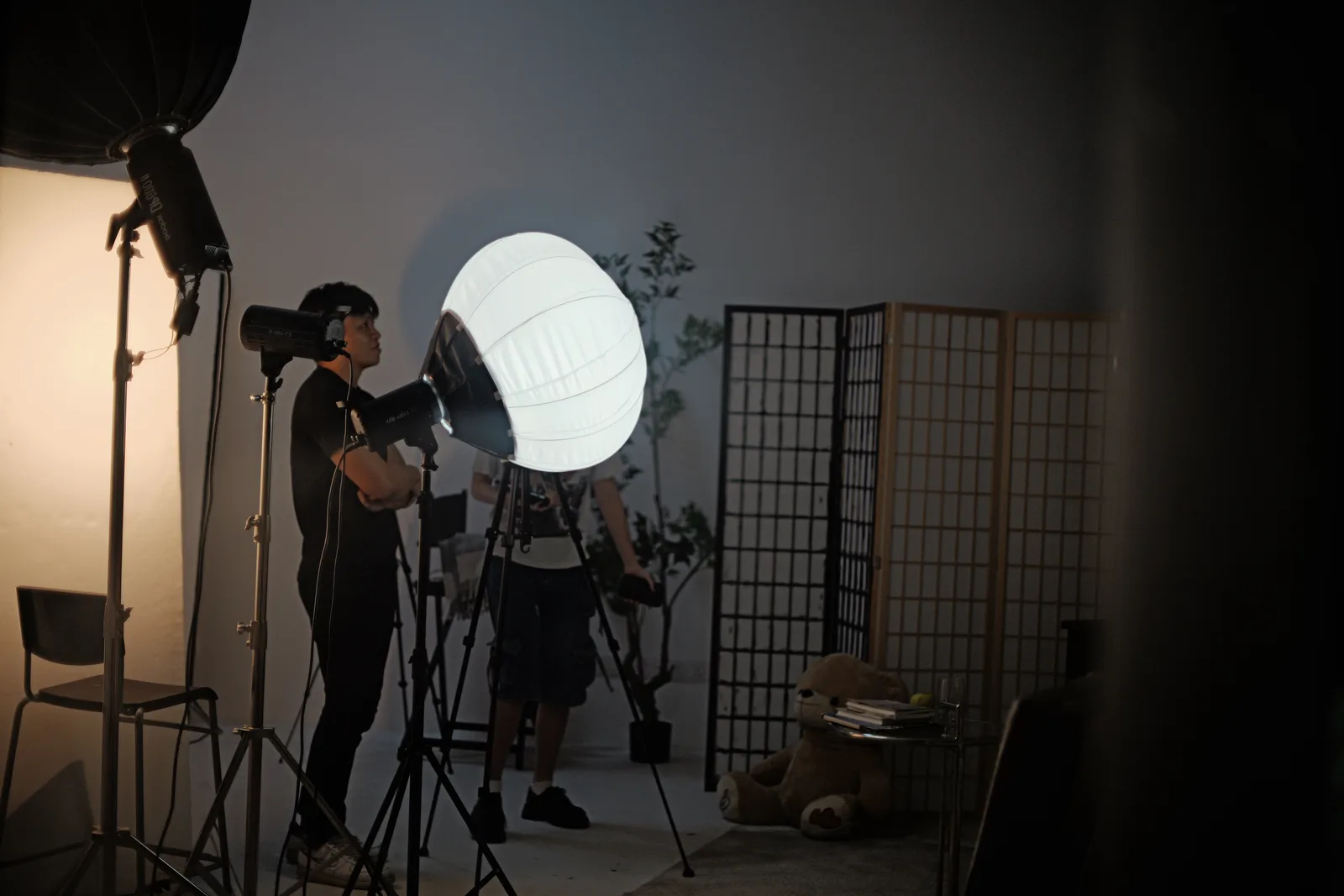
Product. Cars, appliances, anything with reflective surfaces or fine detail needs light placed for it. In our experience, reflections and colour are the first things a phone gets wrong on a product.
Presenters. A person speaking to camera needs clean sound, a few takes and someone watching the frame. If you want the same piece in Bahasa Malaysia, English and Mandarin, each version needs its own takes, planned on the shot list.
Paid media. Once money sits behind a video, small faults show: a wobble, a hum, soft focus. Ads also need variants. Zenweb’s guide to video marketing agencies in Malaysia plans one master plus 8 to 12 variants from a single shoot day, because ads need several hooks, lengths and aspect ratios to test against each other. That set is far easier to cut from footage planned for it.
Matching across months. A series looks like a series when the framing, colour, sound and on-screen text stay the same. Lamanify describes Reels as favouring clean presentation with high-contrast subtitles. A crew working from the same setup each round keeps that consistent.
Phone and crew side by side
| Phone, filmed by your team | Crew, on a planned shoot day | |
|---|---|---|
| Turnaround | Can go up within the hour | Planned ahead, edited after the day |
| Sound | The phone mic, unless you add a clip-on | Clip-on mics on every speaker |
| Light | Whatever is in the room | Placed for the product and the presenter |
| Retakes | Rare, the moment has passed | Built into the day |
| Languages | One take, one language | BM, English and Mandarin cutdowns from the same day |
| Looks the same in month 6 | Hard, depends who holds the phone | Same framing and grade each round |
| Best for | Behind the scenes, quick replies, candid moments, trends | Product, presenters, paid media, series |
The split by post type
Here is how we would assign a typical brand calendar.
On a phone:
- Behind the scenes: setting up a showroom, unpacking stock, the team before an event.
- Quick replies: a 20-second answer to a comment or a question in the DMs.
- Candid moments: a customer collecting a car, a staff birthday, a visitor’s reaction.
- Trends: anything with a sound or format that will be stale in a week.
With a crew:
- Product walk-throughs and feature pieces.
- Presenter pieces, especially in more than one language.
- Anything you will boost or run as an ad.
- A recurring series with a fixed look: a weekly question, a monthly model, a cost explainer.
The grey area is an event day. Live moments can go out from a phone while the event runs, and the crew’s highlight follows. Both have a slot.
What the dealer rounds looked like
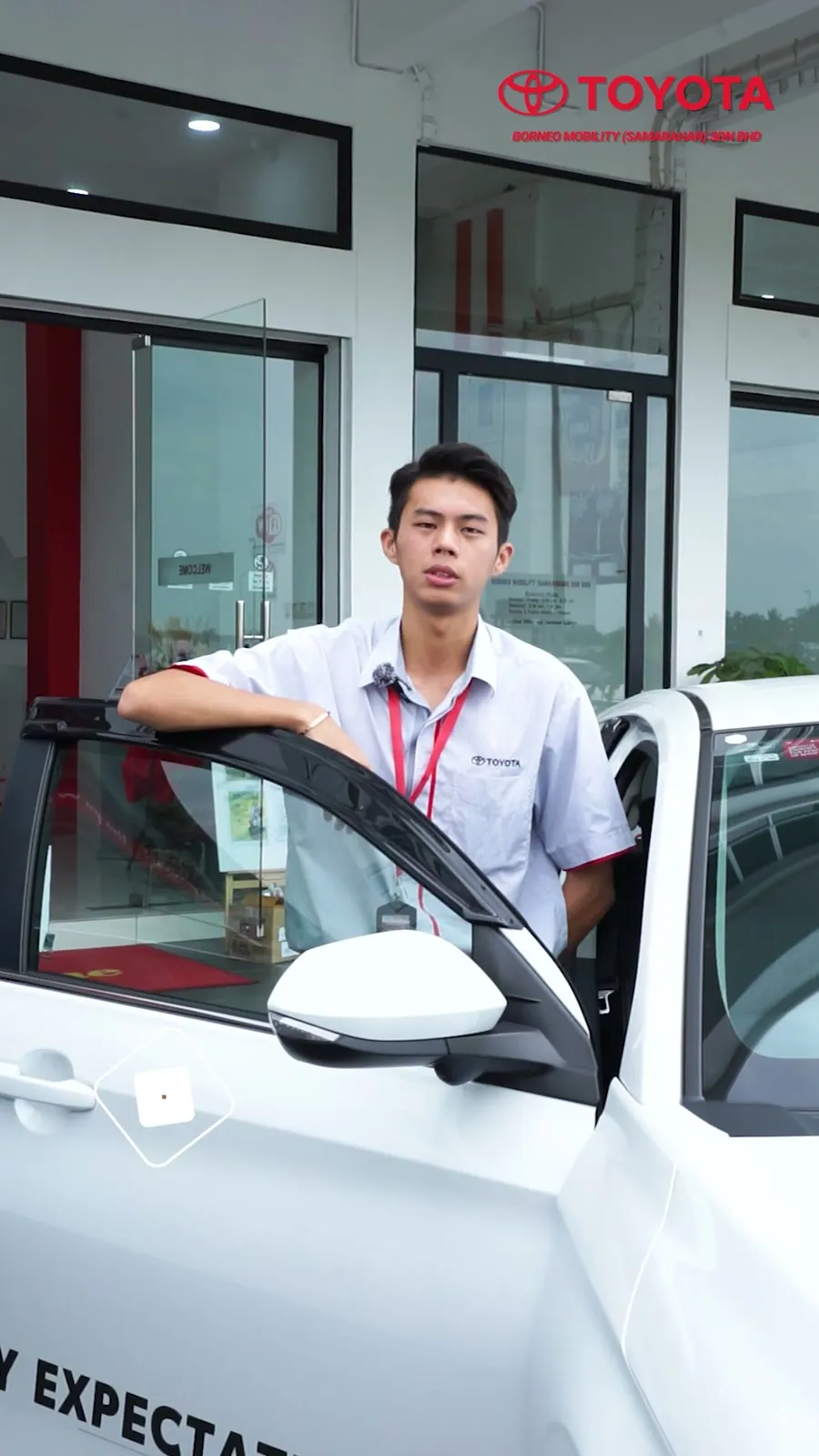
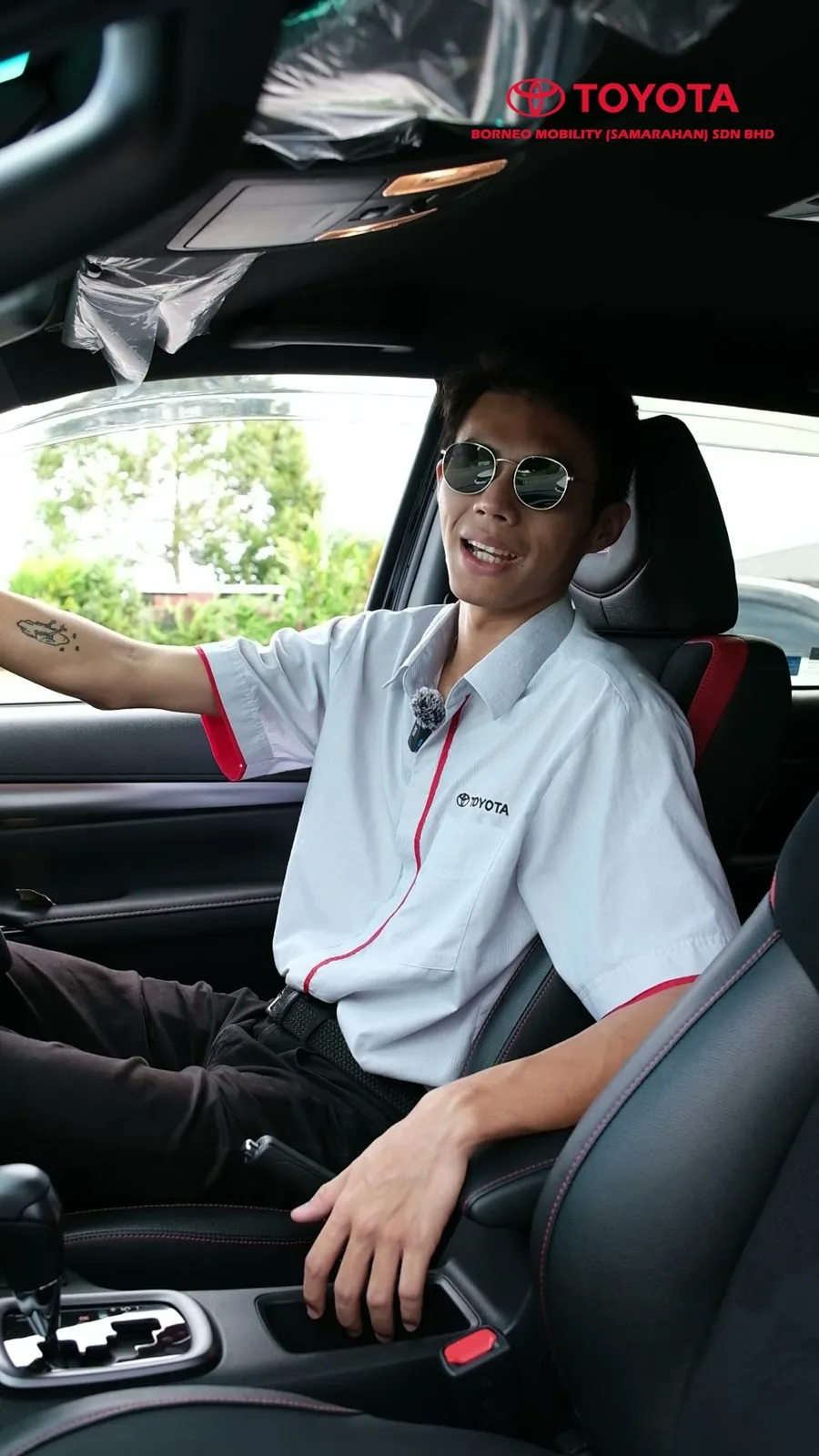
For Toyota Borneo Mobility in Samarahan and Kuching, the dealer content was crew work: sales advisors presenting the showroom, and model walk-throughs of the Corolla Cross, Yaris, Hilux, Hiace and Veloz. Each round produced 2 vertical clips, and feature films for the Corolla Cross Hybrid and the Hiace were cut from the same showroom footage.
That last point is the case for a crew on product. Footage lit and framed for the vertical clips also carried the feature films. In our experience, phone footage rarely stretches to that second use.
What we would leave to a dealer’s own staff is the rest of the feed: a new car leaving with its owner, a quick answer to a question from the comments, the showroom on a busy Saturday.
Running both on one calendar
Decide the split before the month starts. Give crew pieces fixed slots and let phone posts fill the gaps. We work that through for a 3-a-week calendar in how many videos a month a brand needs, and show how a crew day is planned to fill its slots in what one batch shoot day produces.
A few habits make phone posts sit well next to crew work:
- Film vertical, always.
- Face a window, never with your back to it.
- Use a clip-on mic for anything with speech.
- Hold the first frame steady for a second before anyone talks.
- Burn in subtitles. Lamanify’s guide says over 65% of Malaysian mobile users watch social video on mute.
If you are weighing a staff videographer against a studio for the crew half, in-house videographer or a studio on retainer compares the two.
Before you decide
List the posts you plan for a month and mark each one phone or crew using the split above. The crew column is what to brief a studio on. The rest of the series is in the short-form video guides.
When you have that list, send us the date and a line on the job. We reply with a quote within 1 working day.
Questions people ask
Do I need expensive camera equipment for video marketing in Malaysia?
Not for every post. Lamanify's Malaysian short-form guide says a smartphone with good natural light and a cheap wireless clip-on mic can beat a polished TV-style commercial. We agree for behind-the-scenes clips, quick replies and candid moments. For product, presenters, paid ads and series that must match across months, a crew with lights and mics is worth it.
Is a professional crew worth it for Reels when staff can film on a phone?
For some posts, yes. A crew earns its place on product shots, presenter pieces, anything with paid media behind it, and anything that has to look the same in month 6 as it did in month 1. Phone content wins on speed and candour. We recommend both on the same calendar, split by post type and decided before the month starts.
What should staff film on a phone?
Behind the scenes, quick replies to comments, candid team moments and trends that move too fast to book a crew for. Lamanify notes that trends on TikTok in Malaysia move within 48 hours. Film vertical, face a window, use a clip-on mic if you have one, and hold the first frame steady for a second before anyone speaks.
Can phone footage and crew footage sit on the same feed?
Yes, if the feed has a pattern. Give crew pieces fixed slots, such as product and presenter posts, and let phone posts fill the gaps. In our view a casual clip between 2 planned ones looks normal on a feed. Mixing both kinds of footage inside one short cut is harder, so keep each cut to one source where you can.
Should paid ads use phone-filmed or crew-filmed video?
Usually crew-filmed, because ads need several hooks, lengths and aspect ratios to test, and those come easiest from footage planned for it. Zenweb's guide to video marketing agencies in Malaysia plans one master plus 8 to 12 variants from a shoot day for that reason. A phone clip that is already doing well organically can still be tested as an ad.