How to get clean audio on a trade show floor
Clip-on mics, a backup recorder, a quiet corner and a well-timed retake: how to get usable interview audio at a noisy exhibition or conference in Malaysia.
Put a clip-on mic on every person who speaks, record a backup of each voice on a second device, and move interviews to the quietest corner of the venue. The camera’s own microphone hears the whole hall, so on a trade show floor it should never be the main source of sound.
This guide is for event leads and exhibitors in Malaysia who need interviews, speaker clips or booth demos from an exhibition or conference. It covers what the crew brings, what the organiser arranges, and when to ask a speaker to say it again.
Why the hall is louder on camera than in person
Your ears filter a busy hall. You stand in an aisle, talk to someone, and hear them fine. A microphone doesn’t filter anything. It records the demo loop at the next booth, the PA announcement, the forklift at the loading bay and hundreds of other conversations, all at the same level as the person you’re interviewing.
Tradegroup’s guide for exhibitors notes that most organisers allow booths to play sound up to 85 dB, which it compares to a lawn mower near your window. That’s the limit your neighbours may reach while you’re trying to record a 40-second answer.
Noise you can hear under a voice is hard to remove later. Cleaning it in the edit takes time and often leaves the voice sounding thin. The fix is on the floor, before you press record.
What the crew brings
This is the kit we would expect any crew to bring to an exhibition or conference job.
- A clip-on mic for every speaker. Clipped on the chest, a hand’s width below the chin. MarketScale’s guide to booth content makes the same point: a clip-on mic isolates the speaker’s voice and gives audio you can publish without heavy cleanup.
- A backup recorder. A second, separate recording of each voice. Wireless links drop, batteries die and someone walks between the transmitter and the receiver. If the main track fails, the backup saves the interview.
- Headphones on the camera operator. Someone has to listen to every take as it’s recorded. Problems found on the floor can be fixed with a retake. Problems found in the edit can’t.
- A camera mic as a reference. It records the room so the editor can line up the tracks and add a little hall sound back in.
- Spare batteries and a second set of mics. A 2-day show is long.
What the organiser arranges
Some of the best audio decisions are made by the organiser, weeks before the crew arrives.
| Item | Who arranges it | Why it matters |
|---|---|---|
| A quiet room for interviews, with times booked | Organiser | The biggest single difference to interview audio |
| A feed from the sound desk for stage sessions | Organiser, through the AV team | Keynotes and panels recorded at the desk are cleaner than any mic in the hall |
| Access before the doors open | Organiser | Mic checks and booth interviews in an empty hall |
| Exhibitors pausing their own booth audio during an interview | Organiser or exhibitor | Your own demo loop is the closest noise to your mic |
| Clip-on mics, backup recorders, headphones | Crew | The crew’s job, and it belongs in the quote |
| Speakers told they will wear a mic | Organiser, in the speaker brief | No surprises at the mic check |
Find the quiet corner before the doors open
Walk the venue with the organiser on setup day or early on day 1. Look for a meeting room, a back-of-house corridor, a booth storeroom or the far end of an aisle away from the stage. Stand still and listen for a minute. Air conditioning hum is fine. Music isn’t.
Put the speaker with their back to a soft surface if you can, such as a curtain or a fabric booth wall. Hard glass walls throw sound around. Keep away from the PA speakers, which usually hang near the stage and the entrance.
If there’s no quiet corner, do the interviews before the doors open, when the hall is still empty. We plan the shot list around that window, and our event shot list template has a line for it.
When to ask a speaker to say it again
A retake costs 30 seconds. A ruined answer costs the clip. We ask for a retake when:
- A noise lands on the line you need. An announcement, a cough, a dropped tray.
- The answer starts mid-thought. “And that’s why we…” needs the start of the thought to stand alone.
- The speaker refers back. “As I said” or “like your last question” makes no sense in a clip on its own.
- The answer runs long. In our experience, a 2-minute answer usually holds a 40-second clip. Ask for the short version while the speaker remembers it.
How we ask matters. “That was good. The announcement came in over the middle. Could you give me that once more, starting with the part about the warranty?” Give them the first few words. Never ask more than twice. If the second take still has a problem, note the time and move on. We find speakers who expect a mic and a retake relax faster, so put both in the brief. How to prepare a founder for camera has the rest of that brief.
What clean audio looks like in a finished clip
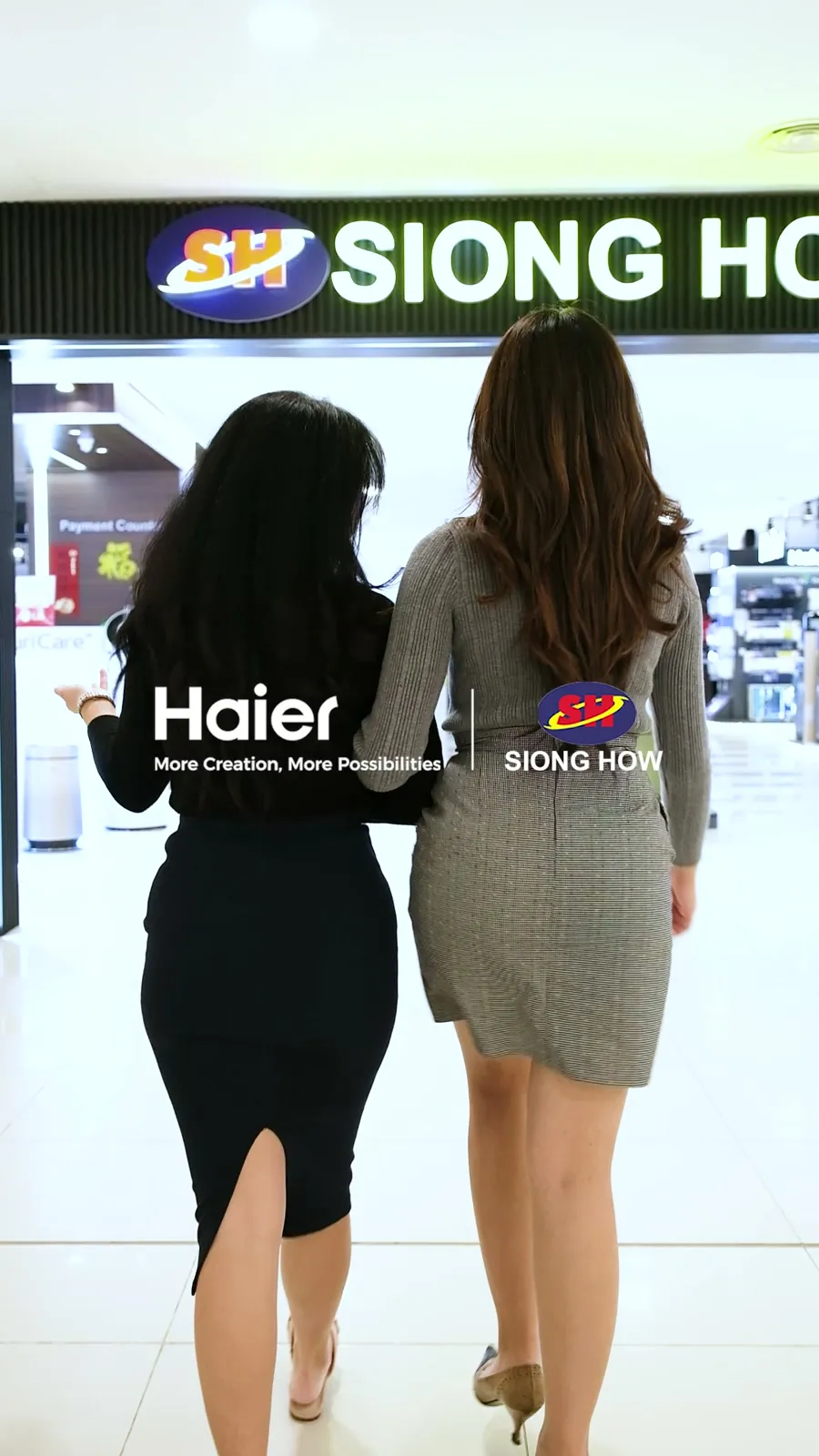
The retailer interview we filmed for Haier was shot in a showroom, not on a trade show floor, but it shows the method. A clip-on mic sits on the speaker’s dress, visible in the frame. The mic sits a short distance from her voice, and the edit cuts away to the products she talks about. The captions are burned into the picture in Mandarin, so the clip still works with the sound off.
Captions are a second layer of protection. LinkedIn’s own marketing blog reported in 2021 that 79% of videos in its feed are watched with the sound off. Viewers who do turn the sound on will hear every flaw in the audio. Those who don’t will read the captions. For clip length and caption style, read how long should a speaker clip be for LinkedIn, and the full set of guides for this kind of job is on the exhibitions and conferences hub.
Before the show
Ask the organiser for a quiet room and a sound desk feed now, while the floor plan is still open. Ask your crew to list mics, backups and headphones in the quote.
If you’re filming at an exhibition or conference, send us the date and a line on the job. We reply with a quote within 1 working day, and we write the shot list, interview slots included, before the camera comes out.
Questions people ask
How do you handle audio in noisy environments or large venues?
Put a clip-on mic on every person who speaks, record a second backup of each voice, and move interviews to the quietest spot in the venue. For stage sessions, take a feed from the sound desk. The camera's own microphone hears the whole hall, so treat it as a reference track only, never the main source.
How noisy is a trade show floor?
Louder than it feels while you're walking it. Neighbouring booths play demo loops, the PA makes announcements and every aisle is full of conversation. Tradegroup's guide for exhibitors says most organisers cap booth sound at 85 dB, roughly a lawn mower near your window, and that is the ceiling your neighbours are allowed to reach.
Do I need a quiet room for interviews at an exhibition?
If the interviews matter, yes. A meeting room, a back-of-house corridor or a booth storeroom will give you far cleaner audio than the aisle. Book it with the organiser before the event and agree time slots, because quiet rooms at busy shows fill up fast.
What should the organiser arrange for the video crew?
Access before the doors open, a quiet room for interviews with times booked, a contact on the AV team who can give the crew a feed from the sound desk, and permission for exhibitors to pause their own booth audio during an interview. The crew brings the mics, the recorders and the headphones.
When should you ask a speaker to repeat an answer?
When a noise lands on the line you need, when the answer starts mid-thought or with 'as I said', or when it runs so long the point gets lost. Ask once, politely, and give them the first few words to start from. If the second take still has a problem, note the time and move on.
Sources
- MarketScale, how to film content at an event when your team runs the booth (clip-on mics isolate the speaker's voice and give usable audio without heavy post-processing)
- Tradegroup, How to optimize video in trade show booths (most organisers allow a maximum of 85 dB at a booth)
- LinkedIn Marketing Blog, 4 tips for better video ads on LinkedIn (79% of feed videos watched with the sound off)